

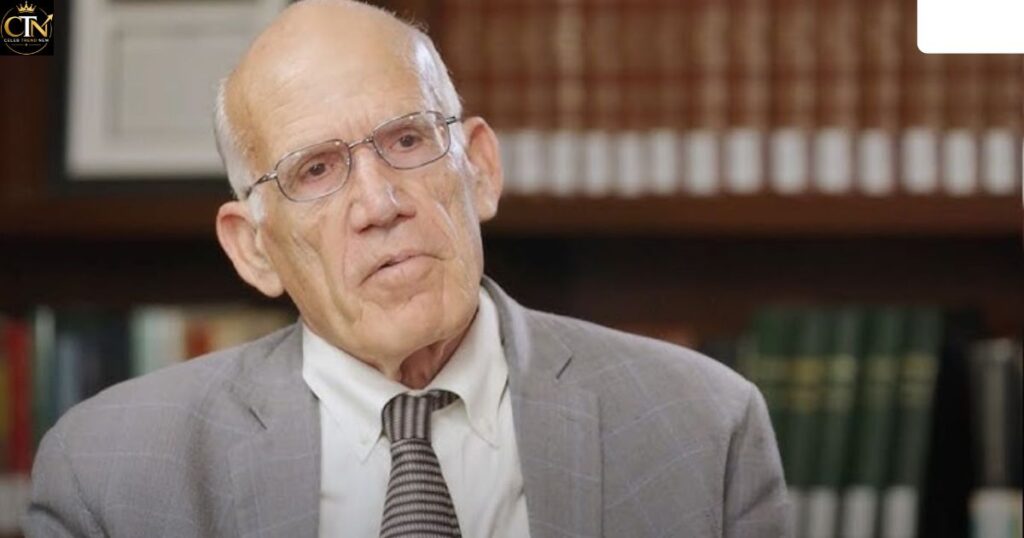
Victor Davis Hanson has built a career that is difficult to place in a single category. He has worked on a California farm, taught ancient history, written influential books on warfare, analyzed modern conflicts, and become a familiar voice in American public debate. That unusual combination has kept his name relevant for more than four decades.
Born in California in 1953, Hanson did not leave his agricultural background behind when he entered academic life. Instead, farming, ancient Greece, military history, and modern society gradually became connected themes in his work. Today, searches for Victor Davis Hanson, victor davis hanson net worth, victor davis hanson wife, and victor hanson net worth show how interest in him has expanded well beyond the academic world.
In 2026, his story is still developing. He remains connected with the Hoover Institution, returned to public discussion after a serious health challenge, and released another major political book in September 2026.
Who Is Victor Davis Hanson? A Life Shaped by History and the California Valley
Victor Davis Hanson was born on September 5, 1953, in Fowler, California. His childhood was closely connected to the Central Valley, one of America’s major agricultural regions. That rural environment was not simply the setting of his early years; it eventually became part of the way he understood society, economics, land ownership, and cultural change.
His path toward becoming a historian began with classical studies. Hanson completed a bachelor’s degree in classics at the University of California, Santa Cruz, in 1975. He later studied at the American School of Classical Studies in Athens before earning a Ph.D. in classics from Stanford University in 1980.
Victor Davis Hanson Profile
| Category | Details |
| Full Name | Victor Davis Hanson |
| Date of Birth | September 5, 1953 |
| Age in 2026 | 73 |
| Birthplace | Fowler, California |
| Nationality | American |
| Main Profession | Historian, author and academic |
| Academic Field | Classics and military history |
| Bachelor’s Degree | UC Santa Cruz |
| Doctorate | Stanford University |
| Current Role | Senior Fellow, Hoover Institution |
| Home Base | Selma, California |
| Major Interests | Warfare, classics, agriculture and contemporary history |
Why Ancient Greece Became Central to His Work
Hanson’s interest in classical civilization developed into a particular fascination with warfare. Rather than simply asking which side won a battle, he examined the social systems that created armies in the first place.
Ancient Greece gave him an ideal subject. Greek warfare involved farmers, citizen soldiers, landowners, political institutions, city-states, and competing ideas about civic responsibility. Those themes allowed Victor Davis Hanson to connect military events with the societies behind them.
His early scholarship helped establish his reputation as a specialist in ancient warfare and agrarian history. Over time, those same interests widened into questions about why military systems succeed, why civilizations weaken, and how historical patterns may illuminate modern conflicts.
From Farm Work to the University Classroom
Hanson did not immediately build a conventional academic career after completing his doctorate. Farming remained an important part of his life before he entered university teaching full time.
In 1984, he joined California State University, Fresno. There, he helped develop the university’s classics program and taught generations of students about Greek and Roman civilization.
His classroom work earned recognition in 1991 when he received the American Philological Association’s Excellence in Teaching Award. Hanson later held visiting positions at Stanford University, the U.S. Naval Academy, Pepperdine University, and Hillsdale College.
These appointments expanded his professional network while allowing him to address audiences beyond a single university. Eventually, his writing became just as important to his public reputation as his classroom teaching.
Victor Davis Hanson Net Worth in 2026: What Can Actually Be Verified?
The phrase victor davis hanson net worth receives considerable online interest, but this is one area where certainty is difficult. Hanson has never released a detailed public financial statement showing his investments, debts, property interests, publishing contracts, speaking fees, or annual earnings.
As a result, exact figures commonly published by biography websites should be treated as estimates. Some sites place his wealth in the multimillion-dollar range, but those numbers are not backed by publicly available audited records.
Financial Picture at a Glance
| Financial Area | What Is Publicly Known |
| Exact Net Worth | Not officially disclosed |
| Book Royalties | Likely part of his income |
| Academic Income | Long professional academic career |
| Research Position | Senior Fellow at Hoover Institution |
| Speaking Income | Possible but privately contracted |
| Media Work | Regular public commentary |
| Digital Content | Podcasts, interviews and video |
| Agricultural Property | Long connection to family farmland |
Why Online Estimates Can Be Misleading
Celebrity-finance websites frequently calculate wealth without having access to private financial records. Their formulas may rely on career length, visible property, bestselling books, or assumed salaries.
That approach may produce an interesting guess, but it should not be confused with verified financial reporting. Victor Davis Hanson is not a public-company founder whose stock ownership can easily be valued through regulatory filings.
The safer conclusion is that he has enjoyed a long and commercially productive professional career. Whether his actual wealth matches any specific figure appearing online remains private.
Books Have Created a Long-Term Revenue Stream
Publishing is one of the clearest potential sources of Hanson’s income. He has written more than two dozen books, several of which have remained in circulation for years.
Books can generate revenue through hardcover editions, paperbacks, ebooks, audiobooks, foreign editions, licensing, and later reprints. A large back catalogue can therefore continue producing royalties even when an author is working on newer projects.
Hanson’s recent publication history strengthens that point. Basic Books released The Counterrevolution: The Fall and Rise of Donald Trump and the MAGA Movement on September 8, 2026. The publisher identifies Hanson as the author of more than two dozen books and lists the new title in hardcover, ebook, and audiobook formats.
Academic Work Has Provided Career Stability
Another important part of his financial story is the length of his academic career. Hanson spent years teaching and later developed a long association with the Hoover Institution.
He currently serves as the Martin and Illie Anderson Senior Fellow at Hoover, where his focus includes classics and military history.
An institutional position of this type provides a much more stable professional foundation than relying exclusively on occasional book sales or speaking engagements.
Speaking, Journalism and Digital Media

Hanson has also spent decades writing newspaper columns, essays, reviews, and public commentary. His Hoover biography notes hundreds of articles, editorials, and reviews in addition to his books.
He has also appeared frequently in interviews, podcasts, public events, and digital programs. These activities can provide direct compensation while also increasing the visibility of his books.
The result is a career built around several income channels rather than a single job. That diversity helps explain why estimates of victor davis hanson net worth continue to attract attention, even though a reliable exact figure remains unavailable.
How Victor Davis Hanson Turned Scholarship Into a National Career
Victor Davis Hanson’s professional rise was gradual. He did not become widely known because of one television appearance or one controversial book. His reputation developed through teaching, specialized historical scholarship, books for general readers, journalism, and eventually modern media.
That progression is important because it explains why different audiences know him for completely different reasons.
His First Identity Was That of a Classical Historian
Hanson’s earliest serious work focused on Greek agriculture and ancient warfare. His 1983 book Warfare and Agriculture in Classical Greece explored how military campaigns affected farmland and rural economies.
That subject may appear narrow, but it combined two areas that would remain important throughout his career: agriculture and war.
Later books pushed him toward a wider readership. The Western Way of War examined the experience of infantry battle in classical Greece and helped strengthen his reputation in military history.
Rather than romanticizing ancient combat, Hanson was interested in the physical, social, and psychological reality of soldiers confronting one another at close range.
Teaching Helped Shape His Communication Style
Years in the classroom likely contributed to Hanson’s ability to explain historical arguments to non-specialists. Academic expertise alone does not always translate into accessible writing.
Hanson developed a style built around examples, historical parallels, battles, personalities, and broader cultural arguments. That approach made it easier for general readers to engage with topics that might otherwise remain limited to university courses.
His teaching recognition in 1991 came well before his largest public successes, showing that his reputation as an educator preceded his later media visibility.
Military History Expanded His Audience
Military history became the bridge between Hanson’s academic work and a much larger readership. Warfare naturally attracts readers interested in strategy, leadership, technology, political power, and human behavior.
Victor Davis Hanson increasingly examined battles not as isolated events but as products of entire societies.
Questions such as how armies were supplied, why political systems produced certain military behaviors, and why some nations could absorb losses better than others became recurring themes.
That broader approach reached its most popular form in books such as Carnage and Culture, A War Like No Other, and The Second World Wars.
The Hoover Institution Became a Major Professional Base
Hanson eventually became deeply associated with Stanford University’s Hoover Institution. He is now the Martin and Illie Anderson Senior Fellow there, with specialties in classics and military history.
His Hoover work has allowed him to continue studying warfare while also addressing modern strategic questions.
This is another reason it is inaccurate to describe Hanson simply as a television commentator. His public appearances represent only one part of a much longer academic and research career.
Awards Added National Recognition
Hanson’s professional achievements have also been recognized outside his own institutions.He received the Eric Breindel Award for Excellence in Opinion Journalism in 2002, the National Humanities Medal in 2007, and the Bradley Prize in 2008.
These honors came from different areas of his career and demonstrate how his work moved across academic scholarship, public humanities, teaching, and commentary.
A Career That Moved Beyond the Printed Page
When he began publishing, historians largely reached readers through academic journals, newspapers, books, lectures, and classrooms. Today, podcasts and video platforms allow an author to speak directly to large audiences.
Hanson adapted to that shift. Long-form discussions, interviews, podcasts, digital columns, and video commentary now sit alongside his books.
That change has introduced his work to younger audiences who may never have encountered him through a university history course.
Victor Davis Hanson Books: The Works That Defined Different Stages of His Career
Books remain the clearest way to understand Hanson’s intellectual development because each major title reflects a different stage of his interests.
Some are tightly focused historical works. Others address warfare across centuries, while his more recent titles often connect history to contemporary American politics and culture.
Selected Books by Victor Davis Hanson
| Book | Year | Main Theme |
| Warfare and Agriculture in Classical Greece | 1983 | War and farming in ancient Greece |
| The Western Way of War | 1989 | Greek infantry battle |
| Fields Without Dreams | 1995 | American agriculture |
| The Other Greeks | 1995 | Farmers and Greek society |
| The Soul of Battle | 1999 | Military leadership |
| Carnage and Culture | 2001 | Culture and military power |
| A War Like No Other | 2005 | Peloponnesian War |
| The Second World Wars | 2017 | World War II |
| The Case for Trump | 2019 | Contemporary American politics |
| The Dying Citizen | 2021 | Citizenship and institutions |
| The End of Everything | 2024 | Destruction in war |
| The Counterrevolution | 2026 | Trump and the MAGA movement |
Carnage and Culture
Published in 2001, Carnage and Culture became one of the books most closely associated with Victor Davis Hanson.
Its central argument examines whether particular Western political, cultural, and institutional traditions helped produce distinctive forms of military effectiveness.
The book ranges across different periods rather than staying within ancient Greece. That broad scope made it attractive to general readers but also generated scholarly disagreement over the extent to which complex military outcomes can be explained through cultural patterns.
That debate contributed to the book’s longevity. Works that provoke strong responses often remain part of historical discussion longer than books that attract little disagreement.
A War Like No Other
In A War Like No Other, Hanson returned to ancient Greece through the Peloponnesian War.The conflict between Athens, Sparta, and their allies lasted for decades and involved political rivalry, disease, naval operations, sieges, land warfare, rebellion, and shifting alliances.
Hanson organized the story around different experiences of war rather than presenting only a conventional year-by-year narrative.
That approach helped readers understand the conflict as something experienced by soldiers and civilians instead of merely a sequence of diplomatic decisions.
The Second World Wars
Published in 2017, The Second World Wars allowed Hanson to apply his large-scale approach to the most destructive global conflict of the twentieth century.
He examines geography, production, weapons, air power, naval strength, political leadership, and strategic decision-making.
The plural word “Wars” in the title reflects the book’s broader argument that World War II consisted of interconnected struggles fought under very different conditions.
Readers encounter Europe, the Pacific, North Africa, the Soviet front, and the industrial competition that helped determine which nations could continue fighting.
The End of Everything
The End of Everything, published in 2024, explores one of the darkest possibilities in military history: the complete destruction of societies after defeat.
Instead of asking only why an army loses, the book looks at what happens when military defeat becomes something far more final.
The topic returns to a question that has followed Hanson throughout his career: why do some societies survive catastrophic wars while others disappear or lose their political independence permanently?
It is a historical theme with obvious emotional weight, making the book accessible even to readers without formal training in military history.
The Case for Trump and His Political Writing
Hanson’s political books belong to a different category from his scholarship on classical warfare.The Case for Trump, published in 2019, presents Hanson’s interpretation of Donald Trump’s political rise and appeal. It is an argumentative political work rather than a neutral survey of competing interpretations.
His political writing has made him popular with many conservative audiences while also attracting substantial criticism from those who disagree with his analysis.
For readers evaluating this portion of his career, the useful distinction is between documented biography and political interpretation. Hanson has established academic credentials, while the conclusions in his political commentary remain arguments that can be compared with other perspectives.
The Counterrevolution Brings His Political Analysis Into 2026
Hanson’s newest major book, The Counterrevolution: The Fall and Rise of Donald Trump and the MAGA Movement, was released by Basic Books on September 8, 2026.
The publisher describes it as Hanson’s analysis of Trump’s return to power and the development of the MAGA movement. It follows his earlier The Case for Trump and extends his political interpretation into Trump’s second presidential term.
Its publication is also useful evidence when answering whether Hanson continues to sympathize politically with Trump. His 2026 book analyzes Trump’s comeback in broadly favorable terms, although that does not mean he agrees with every individual statement or policy associated with the president.
Beyond the Books: The Personal Side of Victor Davis Hanson
The public sees a historian, writer, and commentator, but much of Hanson’s personal identity remains connected to the California landscape in which he was raised.
That background gives his biography a continuity that is easy to miss when focusing only on television appearances or political arguments.
Read More : Taylen Biggs Is 12 Years Old and Already Interviewing Celebrities Most Adults Will Never Meet
California Has Remained His Home
Despite academic appointments at prestigious institutions, Hanson did not permanently relocate his identity to an East Coast academic center or large metropolitan media market.His publisher’s 2026 biography continues to identify him as living in Selma, California.
That location matters because the Central Valley appears repeatedly in his writing. Agriculture, irrigation, land use, rural culture, immigration, environmental policy, and economic pressure are not abstract issues for someone whose family background is closely tied to farming.
Farming Became Part of His Literary Identity
Hanson’s books Fields Without Dreams and The Land Was Everything stand apart from his military writing.These works examine agriculture and the transformation of California farming communities.
They also help explain why Hanson often writes about cultural change through physical places rather than only through abstract political theories.
For him, land can preserve family history while also showing how economics and public policy change communities over time.
Victor Davis Hanson Wife and Family Searches

The phrase victor davis hanson wife has become one of the most common personal searches connected to his name.Institutional and publisher biographies, however, devote very little space to his marriage. They primarily document his books, education, professional positions, and research.
Publicly available biographical accounts report that Hanson first married Cara Webb in 1977 and later married Jennifer Heyne in 2013. Those accounts therefore describe two marriages, although this private aspect of his life is much less extensively documented than his professional record.
The larger point is that his private family life should not be reconstructed from unsupported celebrity biography pages simply to satisfy search traffic.
A Family Loss That Became Part of His Story
Public biographical accounts also report that Hanson’s daughter Susannah died from leukemia in 2014.
Personal losses of this kind are naturally different from professional achievements and should be discussed carefully rather than used as sensational biography material.
His public career continued afterward, but such events form part of the human background behind a person whose public image is normally associated with books and arguments.
Victor Davis Hanson’s Health and Return to Public Life in 2026
One of the most important changes in Hanson’s life entering 2026 had nothing to do with books or politics.
He revealed that he had been diagnosed with a rare form of lung cancer and underwent major surgery around the end of December 2025.
The Lung Cancer Diagnosis
Hanson described his condition as a mucinous adenocarcinoma, a form of lung cancer. He said the cancerous tissue and the lower lobe of his right lung were surgically removed.
He also explained that he had previously experienced breathing problems that were attributed to other possible causes before the cancer diagnosis was established.
For a man in his early seventies who remained professionally active, the diagnosis represented a significant interruption to his normal schedule.
Complications Made Recovery More Difficult
Hanson reported that an arterial aneurysm or bleed required another operation and several blood transfusions. He subsequently dealt with low red-blood-cell counts, fatigue, and episodes of atrial fibrillation..
By February 2026, however, he had begun giving additional updates and discussing his recovery publicly.
What His 2026 Activity Shows
Hanson’s publication and media activity later in 2026 indicates that the health crisis did not end his professional career.His new book arrived in September, and he has continued participating in interviews and public discussions.
That return gives the phrase “life in 2026” greater significance than simply listing his current age or job title. This year has included both a serious medical challenge and renewed professional activity.
Why Victor Davis Hanson Still Attracts Such Different Audiences
Very few historians become recognizable to people who do not regularly read history.Victor Davis Hanson has done so partly because his subjects extend beyond any single historical period.
A reader interested in ancient Greece may encounter The Western Way of War. Someone fascinated by World War II may discover The Second World Wars. A reader focused on American political debate may know only The Case for Trump or The Counterrevolution.
That creates overlapping audiences rather than one unified readership.
History Is Usually the Starting Point
Even when Hanson writes about modern politics, his preferred method often involves historical comparison.
He regularly draws connections between ancient conflicts, modern wars, political leadership, institutional stability, and social change.
Historical comparison can be useful, but it also requires caution. No two periods are identical, and debates often arise over whether the analogy being used actually fits the modern situation.This is one reason Hanson’s writing can simultaneously attract enthusiastic readers and strong critics.
His Public Commentary Is More Contested Than His Credentials
Hanson’s educational and professional background is straightforward to document. He holds a Stanford doctorate, taught classics, became a professor emeritus, has written extensively, and serves as a Hoover senior fellow.
Readers can accept his credentials while disagreeing with his conclusions about political figures, institutions, foreign policy, or American culture.
That distinction is important when asking whether Victor Davis Hanson is “credible.” Expertise describes qualifications and experience; it does not transform every political interpretation into an uncontested fact.
He Has Remained Productive Into His Seventies
Longevity is another reason Hanson’s name remains visible.His first books appeared decades before podcasts and social media became major forms of political communication.
Yet in 2026 he is still publishing new books and participating in modern digital media.
That gives his career an unusual span: from specialist scholarship on ancient agriculture to online debates about twenty-first-century American politics.
What Makes Victor Davis Hanson’s Career Unusual?

He is a scholar who spent substantial time farming. He is an ancient historian whose work expanded into modern warfare. He is an academic who developed an audience outside universities. And he is an author who moved from print-era scholarship into podcasts and digital commentary.
He Never Completely Separated Scholarship From Place
California’s Central Valley stayed present throughout Hanson’s life.That connection has given him a physical reference point from which to discuss farming, community, demographic change, and economics.
Even when readers disagree with his broader cultural conclusions, the agricultural dimension distinguishes his work from commentary produced entirely within media or political institutions.
Warfare Has Provided a Connecting Theme
War also creates a surprising continuity across his books.Ancient hoplite fighting, the Peloponnesian War, World War II, modern military strategy, and the destruction of societies appear in very different historical settings.
Yet all allow Hanson to ask similar questions: What makes armies effective? How do institutions influence military outcomes? What happens when leaders miscalculate? Why can some societies endure enormous losses while others fail?
Those themes help explain why his older historical books remain relevant to readers discovering him through modern commentary.
His Financial Success Is Secondary to His Intellectual Footprint
Online search behavior often turns biographies into discussions of wealth.That is why victor davis hanson net worth and victor hanson net worth appear so frequently alongside his name.
But a financial estimate does not explain why people are still discussing an author whose professional career began more than forty years ago.
The more meaningful measure of his public career is the size and variety of the body of work he has produced across classics, military history, agriculture, culture, and politics.
Frequently Asked Questions
What is Victor Davis Hanson diagnosed with?
Victor Davis Hanson disclosed that he was diagnosed with a rare mucinous adenocarcinoma of the lung. He underwent surgery to remove the cancer and part of his right lung around the end of December 2025.
What has happened to Victor Davis Hanson?
He underwent lung-cancer surgery and then experienced a serious postoperative bleed that required another operation and blood transfusions. He later resumed public activity while continuing his recovery.
Is Victor Davis Hanson still a Trump supporter?
His 2026 book The Counterrevolution presents Trump’s political comeback in broadly favorable terms, and his recent commentary remains generally supportive while sometimes discussing disagreements or mistakes involving Trump and his allies.
How many times has Victor Davis Hanson been married?
Public biographical accounts describe two marriages: first to Cara Webb and later to Jennifer Heyne. His institutional biographies provide little detail about his private marital life.
What is Victor Davis Hanson’s religion?
Hanson has publicly identified himself as a Christian and has discussed growing up with Christian influences in his family. In recent interviews, he has also described Christianity as important to his personal worldview.
Conclusion
Victor Davis Hanson is difficult to understand through one label. His life has moved between the farm, the university classroom, historical research, bestselling nonfiction, political commentary, public speaking, and modern digital media. That combination has given him a career far broader than that of a conventional academic historian.
His financial position remains private, so exact claims about victor davis hanson net worth or victor hanson net worth should be treated as estimates rather than established facts. His documented professional record is much easier to measure: decades of teaching, more than two dozen books, major humanities recognition, a senior position at the Hoover Institution, and an audience that extends far beyond academia.
His personal life has also attracted increasing curiosity, including searches about victor davis hanson wife, family, religion, and health. Yet 2026 has shown why his ongoing work remains a more important part of the story. After undergoing lung-cancer surgery and a difficult recovery, Hanson returned to public discussion and released The Counterrevolution in September.

