

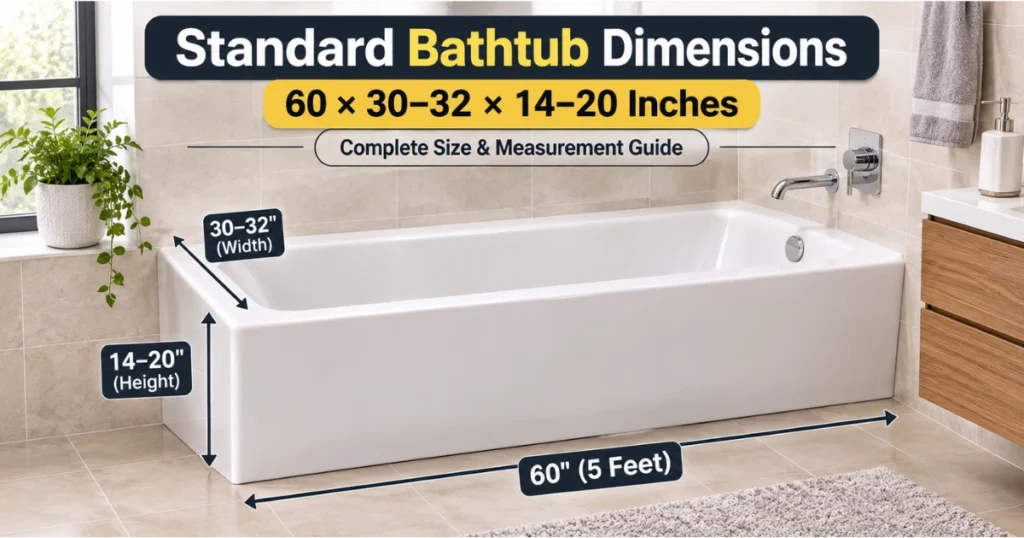
A standard bathtub dimensions in the US measures 60 inches long, 30 to 32 inches wide, and 14 to 20 inches high. That’s approximately 5 feet long and 2.5 feet wide, making it a popular choice for bathrooms across the country.
Most homes use this size for an alcove bathtub, which fits neatly between three walls. However, not every bathroom or bathing preference is the same. Some homeowners need a smaller tub to save space, while others prefer a deeper soaking tub or a larger freestanding design.
Before choosing a bathtub, consider more than its outside dimensions. Its depth, weight, drain position, and required clearance all affect how well it fits your bathroom.
What Are the Standard Bathtub Dimensions in Inches?
The standard bathtub dimensions of an alcove bathtub are 60 inches long × 30–32 inches wide × 14–20 inches high. This size covers approximately 12.5 to 13.3 square feet of floor space.
However, bathtub sizes vary depending on the design. Compact models can be as short as 48 inches, while larger options may reach 72 inches.
Standard Bathtub Dimensions Size in Feet and Metric
If you’re comparing standard bathtub dimensions measurements in different units, use this quick conversion chart.
| Measurement | Feet | Centimeters |
| 48 inches | 4 ft | 122 cm |
| 54 inches | 4.5 ft | 137 cm |
| 60 inches | 5 ft | 152 cm |
| 66 inches | 5.5 ft | 168 cm |
| 72 inches | 6 ft | 183 cm |
| 30 inches wide | 2.5 ft | 76 cm |
| 32 inches wide | 2 ft 8 in | 81 cm |
| 36 inches wide | 3 ft | 91 cm |
A 1500 mm bathtub, sometimes described as a 1500 bath, measures approximately 59 inches long. That’s almost the same as the standard 60-inch US bathtub.
Why Is 60 Inches the Standard Bathtub Dimensions Length?
The 60-inch standard bathtub dimensions became popular because it works well with common bathroom layouts and standard alcove openings.
Many existing bathrooms already have plumbing connections, wall framing, and tile layouts designed around this length. That’s why replacing an old 60-inch bathtub with a similar model is usually easier than installing a different size.
Choosing a longer or wider bathtub may require changes to the surrounding walls, flooring, plumbing, or tile work.
read more:https://celebtrendnews.com/rachel-zoe-net-worth/
Standard Bathtub Dimensions Size Chart by Tub Type
Not all bathtubs follow the same measurements. A freestanding tub needs a different layout from an alcove model, while a soaking tub usually has taller sides for deeper bathing.
Here’s a comparison of common bathtub dimensions.
| Bathtub Type | Length | Width | Height or Depth |
| Alcove | 54–72 in | 30–36 in | 14–20 in |
| Freestanding | 55–72 in | 27–34 in | 15–24 in |
| Drop-in / Undermount | 60–72 in | 30–42 in | 14–20 in |
| Corner | 48–72 in per side | Varies by design | 18–22 in |
| Walk-in | 48–60 in | 28–32 in | 36–48 in |
| Soaking | 60–72 in | 30–40 in | 20 in or more |
These measurements are general planning ranges, not fixed industry standards. Always check the manufacturer’s specifications before purchasing a bathtub.
Standard Alcove Bathtub Dimensions
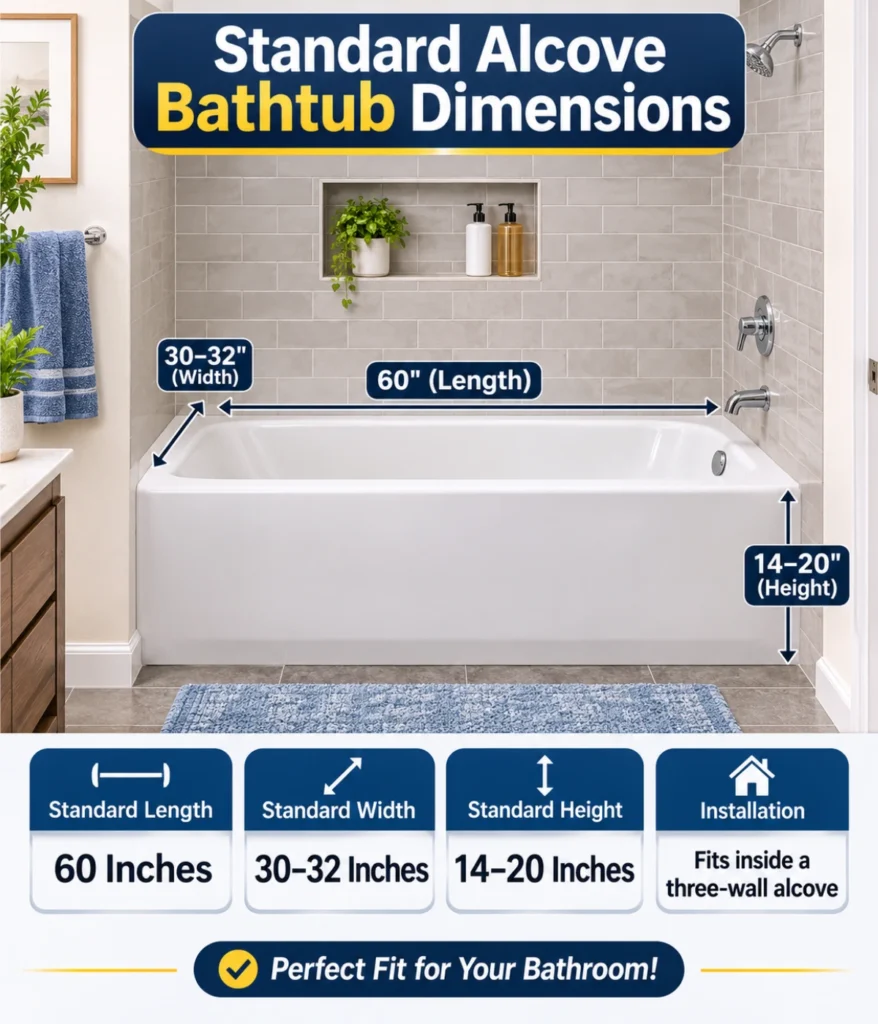
An alcove bathtub sits inside a three-wall enclosure. Its standard size is 60 inches long and 30 to 32 inches wide, although compact and oversized models are also available.
Most alcove tubs have a finished front panel called an apron. This covers the bathtub’s outer structure and gives it a clean appearance.
One important detail to check is the drain position. Depending on the model, the drain may be on the left, right, or in the center. Matching the new tub to your existing plumbing can make installation much easier.
Standard Freestanding Bathtub Dimensions
A freestanding bathtub typically measures 55 to 72 inches long and 27 to 34 inches wide. Unlike an alcove model, it stands independently and doesn’t need three surrounding walls.
Popular designs include:
- Oval tubs: Smooth, curved shapes that suit modern bathrooms.
- Slipper tubs: Raised backs that provide extra support.
- Clawfoot tubs: Traditional designs with decorative feet.
Remember that the listed dimensions describe the bathtub itself. You’ll also need extra room around it for cleaning, walking, and accessing the plumbing.
Plan the floor-mounted or wall-mounted filler location before installation to avoid plumbing changes later.
Standard Drop-In and Undermount Bathtub Dimensions
A drop-in bathtub fits inside a built platform or deck. The surrounding structure hides the outer shell, leaving the rim visible.
An undermount bathtub uses a similar installation area, but the deck material covers the tub’s rim.
Both designs commonly measure 60 to 72 inches long and 30 to 42 inches wide.
Before building the surrounding deck, get the manufacturer’s cutout template. The required opening can differ from the bathtub’s outside measurements.
Standard Corner Bathtub Dimensions
A corner bathtub is designed to fit into a bathroom corner, often with sides measuring 48 to 72 inches.
Its shape may be triangular, rounded, or asymmetrical. Although a corner tub can make good use of an unused area, its overall footprint may take up more floor space than expected.
Check the available walking area around the toilet, vanity, and bathroom door before choosing one.
Standard Walk-In Bathtub Dimensions
A walk-in bathtub generally measures 48 to 60 inches long, 28 to 32 inches wide, and 36 to 48 inches high.
It includes a watertight door that allows users to enter without climbing over a tall bathtub wall. Most models also have a built-in seat and grab bars.
These tubs can be helpful for people who have difficulty stepping into a traditional bathtub.
Before installation, consider the door’s opening direction, available floor space, and plumbing requirements. Some powered models also need a dedicated electrical connection.
Soaking Tub and Two-Person Bathtub Dimensions
A soaking bathtub has deeper sides than a regular bathtub, allowing users to sit in more water. Many models have an outside height of 20 inches or more.
Two-person bathtubs are generally larger, with common dimensions starting around 72 inches long and 36 inches wide.
Both styles can hold considerably more water than a standard alcove tub. Check your bathroom’s floor support and water heater capacity before installing one.
How Long and Wide Is a Standard Bathtub?
A standard bathtub is 60 inches long and 30 to 32 inches wide. This size fits many traditional American bathroom layouts.
However, you can find several other options:
- 48–54 inches: Compact bathtubs for smaller bathrooms.
- 60 inches: Standard size for most alcove installations.
- 66 inches: A little more room for comfortable bathing.
- 72 inches: Larger tubs for spacious bathrooms and soaking.
Does a two-inch difference in width really matter? Absolutely. If your existing bathtub opening is 30 inches wide, a 32-inch model may not fit without changing the surrounding walls or tile.
Also, don’t judge comfort by outside length alone. The interior basin length determines how much room you actually have to stretch your legs. Thick rims, curved walls, and sloped backs can reduce that usable space.
How Deep Is a Standard Bathtub?
Most standard bathtubs measure 14 to 20 inches deep on the outside. The rim height of many traditional models falls between 14 and 16 inches.
However, outside depth and usable water depth are two different measurements.
The overflow opening prevents water from rising all the way to the top of the tub. As a result, the actual bathing depth is lower than the bathtub’s overall height.
When comparing models, check the manufacturer’s stated water depth to the overflow. This gives you a better idea of how much water will cover your body while bathing.
A standard bathtub dimensions may hold approximately 40 to 60 gallons of water up to the overflow, depending on its shape and dimensions. According to Dimensions.com, a typical bath uses around 35 to 50 gallons.
Deep soaking tubs have taller sides and hold more water. However, their increased height also creates a higher step-over point.
This is worth considering if children, older adults, or people with limited mobility will use the bathtub.
Standard Bathtub for a Small Bathroom
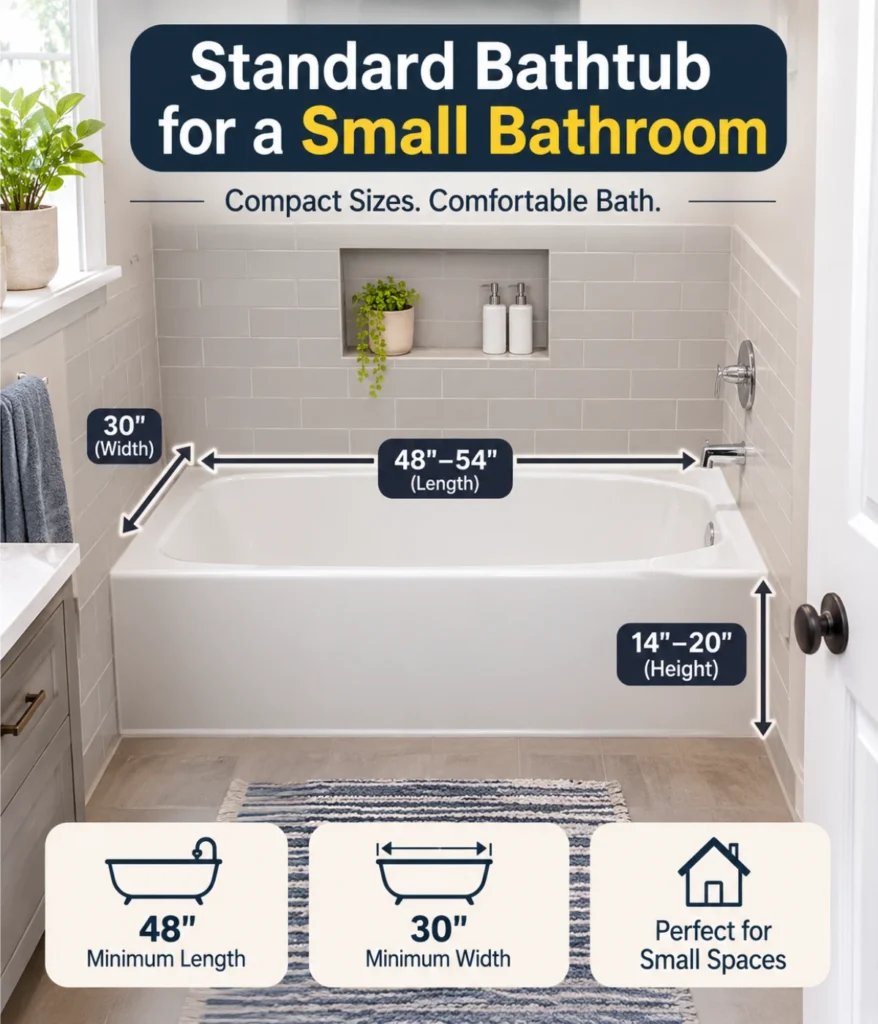
Choosing a bathtub for a small bathroom can be tricky. You want enough room for comfortable bathing without making the rest of the bathroom feel cramped.
The smallest common bathtub sizes start at approximately 48 inches long and 30 inches wide. A 54-inch bathtub is another practical option for compact spaces.
Here are a few choices worth considering:
- Compact alcove tub: Fits into a smaller three-wall enclosure.
- 54-inch bathtub: Offers a balance between bathing comfort and space savings.
- Corner bathtub: Uses a corner area that might otherwise go unused.
- Tub-shower combination: Provides both bathing and showering in one space.
Is a 54-Inch Standard Bathtub Dimensions Too Small?
Not necessarily. A 54-inch bathtub can work well in a guest bathroom or a home where space is limited.
However, adults who enjoy longer baths may find a 60-inch or larger model more comfortable.
Will a Standard Bathtub Dimensions Fit in a 5×8 Bathroom?
Yes. A 60-inch standard bathtub dimensions commonly fits along the shorter wall of a traditional 5×8 bathroom.
This arrangement leaves the remaining space for a toilet, vanity, and walking area. However, the exact layout depends on door placement, fixture dimensions, and local building requirements.
If your bathroom measures less than approximately 40 square feet, a walk-in shower may offer more practical floor space.
For additional bathroom planning advice, visit the National Kitchen & Bath Association (NKBA).
How Much Space Do You Need for a Standard Bathtub?
A standard 60 × 30-inch bathtub covers approximately 12.5 square feet of floor space. A larger 72 × 36-inch model requires around 18 square feet.
But the bathtub’s footprint isn’t the only measurement that matters. You also need enough room to enter, exit, and move around comfortably.
Consider these planning points:
- Front clearance: Aim for approximately 30 inches of clear floor space in front of the bathtub.
- Nearby fixtures: Allow enough room between the tub, toilet, and vanity for comfortable movement.
- Door clearance: Check that the bathroom door doesn’t interfere with the bathtub or available standing area.
- Wall clearance: Account for tile backer, waterproofing, and finishing materials when measuring the opening.
These are general planning suggestions, not universal building-code requirements. Check your local regulations before installation.
For accessible bathroom layouts, review the official ADA requirements.
Standard Bathtub Dimensions Size Recommendations by Bathroom Size
Use this chart as a starting point when comparing bathtub options.
| Bathroom Size | Suitable Bathtub Options |
| Under 40 sq. ft. | 48–60 in compact alcove or corner tub |
| 40–100 sq. ft. | 60–66 in alcove, drop-in, or compact freestanding tub |
| Over 100 sq. ft. | 66–72 in freestanding, soaking, or oversized drop-in tub |
Your bathroom’s shape and fixture placement matter just as much as its total square footage.
How Much Does a Standard Bathtub Dimensions Weigh Filled With Water?
A standard bathtub dimensions weight becomes much more important once you fill it with water.
Water weighs approximately 8.34 pounds per gallon. For example, 45 gallons of water add roughly 375 pounds to the bathtub.
You also need to account for the tub itself and the weight of the person using it.
Here’s an approximate comparison:
| Bathtub Type | Estimated Total Weight |
| Standard acrylic alcove | About 635 lb |
| Cast iron freestanding soaker | About 1,210 lb |
These estimates assume a 180-pound bather and approximately 45 gallons of water. Actual weights vary by model and water capacity.
The International Residential Code (IRC) lists a 40 psf minimum floor live-load requirement for many residential rooms.
However, a bathtub’s concentrated weight is different from a typical evenly distributed floor load. The floor structure, joist spacing, tub location, and support conditions all affect whether an installation is suitable.
If you’re installing a heavy cast iron or stone bathtub on an upper floor, ask a qualified structural professional to check the floor before proceeding.
Also, compare the bathtub’s capacity with your water heater. A large soaking tub may require more hot water than a small residential tank can provide.
Plumbing and Rough-In Standard Bathtub Dimensions People Often Forget
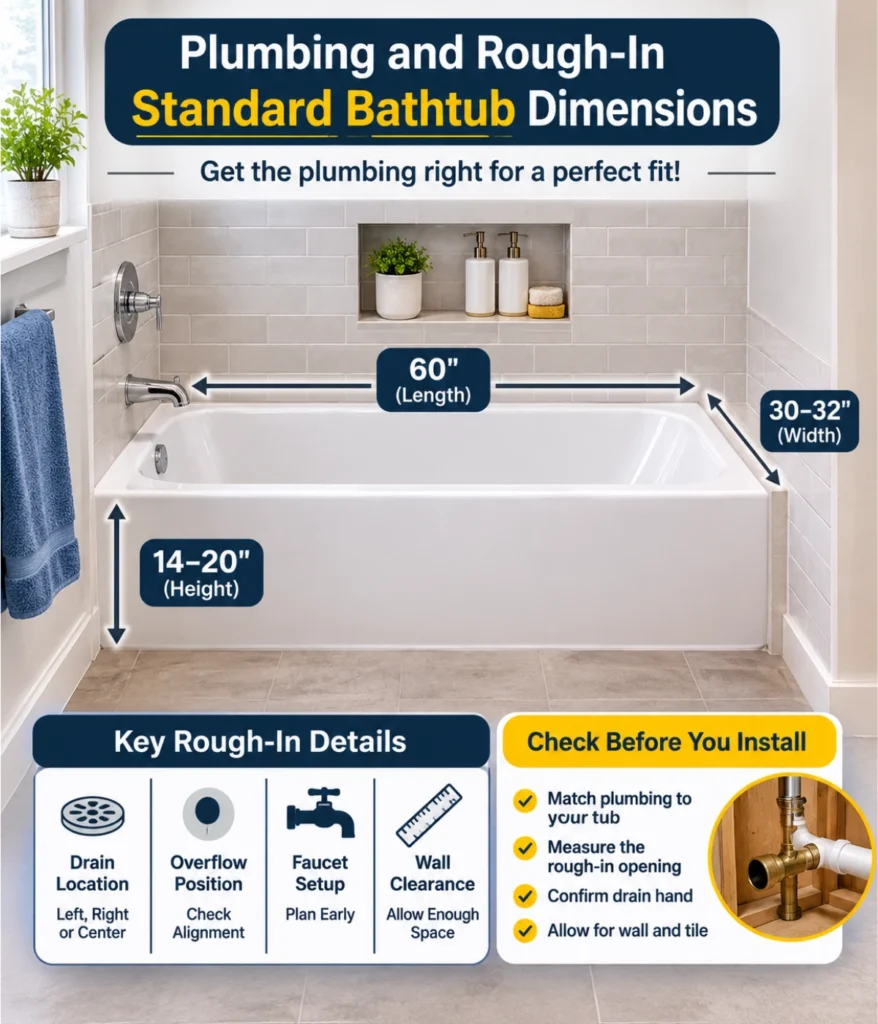
A bathtub can match your bathroom opening perfectly and still create installation problems if its plumbing connections don’t line up.
Before ordering, check these details:
Drain position: Confirm whether the drain is on the left, right, or center. When checking an alcove tub, stand facing the bathtub’s open side to identify the correct drain hand.
Drain centerline: Measure the drain’s location from the surrounding walls. Even a small difference can require plumbing adjustments.
Overflow position: Check where the overflow opening sits and whether it matches your existing plumbing arrangement.
Apron height: Make sure the bathtub’s front panel works with your finished floor height.
Faucet and filler location: For freestanding models, decide where the filler will sit before the plumber completes the rough-in.
Don’t forget that new flooring and tile can change the finished bathtub opening. Measure after accounting for all planned materials.
How to Measure for a Standard Bathtub Dimensions
Taking accurate measurements before buying a standard bathtub dimensions can save you from expensive installation problems.
Follow these steps:
- Measure the alcove: Check the length and width at the floor, rim, and upper wall.
- Check the walls: Make sure the surrounding walls are reasonably square and don’t narrow the opening.
- Locate the drain: Measure its distance from the back and side walls.
- Check the clearance: Measure the available floor space in front of the tub and check the bathroom door swing.
- Account for finished surfaces: Include tile, wall panels, waterproofing, and flooring in your measurements.
- Measure the delivery route: Check doorways, hallways, stairs, and tight corners before ordering.
Will a Standard Bathtub Dimensions Fit Through the Bathroom Door?
Not always. A bathtub may fit inside your bathroom but still be too large to pass through the doorway.
Measure the door opening and the tightest turns along the delivery route. Check the bathtub’s diagonal dimensions as well as its length and width.
Material makes a difference here. An acrylic bathtub is generally easier to move and position than a heavy cast iron model.
A cast iron standard bathtub dimensions can weigh several hundred pounds, so make sure your delivery team has enough space and suitable equipment to handle it safely.
One common mistake is measuring only the old bathtub. Always measure the actual opening and the entire delivery route before purchasing a replacement.
Standard Bathtub Dimensions by Material
Standard bathtub dimensions material affects its weight, durability, heat retention, and installation requirements. It can also change the amount of usable interior space.
Here’s how common standard bathtub dimensions materials compare.
| Material | Typical Weight | Main Characteristics |
| Acrylic / Fiberglass | About 70–100 lb | Lightweight, easy to handle, and generally comfortable |
| Steel | Varies by model | Durable, but can feel noisier and cooler |
| Cast Iron | About 350–550 lb | Excellent heat retention but very heavy |
| Solid Surface / Stone | Heavy | Premium appearance and substantial weight |
These are approximate weight ranges. Actual measurements depend on the manufacturer and bathtub design.
Another detail worth checking is wall thickness. Two bathtubs with identical outside dimensions may have different interior basin sizes because of their construction materials and wall designs.
How to Choose the Right Standard Bathtub Dimensions Size
The best standard bathtub dimensions isn’t necessarily the biggest or most expensive one. It should fit your bathroom, suit the people who use it, and work with your existing plumbing.
Here are a few recommendations based on different needs:
- Families with children: A 60-inch alcove standard bathtub dimensions with a shower combination is a practical choice for everyday use.
- Tall adults: Consider a 66- to 72-inch bathtub, but compare interior basin length before buying.
- Couples: A larger two-person bathtub with extra width and depth may offer more comfort.
- Older adults: Look for a walk-in bathtub or a traditional model with a lower step-over height.
- Small bathrooms: A 48- to 54-inch compact bathtub can help preserve valuable floor space.
Standard bathtub sizes are usually easier to find and replace. They’re also more likely to work with existing bathroom layouts.
Custom-sized bathtubs can solve unusual layout problems, but they may involve higher costs, longer delivery times, and additional construction work.
Before making a final decision, compare the bathtub’s outside dimensions, interior basin size, water capacity, and installation requirements.
Question’s
What are the standard bathtub dimensions in inches?
A standard alcove bathtub measures approximately 60 inches long, 30 to 32 inches wide, and 14 to 20 inches high. Freestanding, corner, and soaking tubs have different dimensions.
How long and wide is a standard bathtub?
Most standard bathtubs are 60 inches long and 30 to 32 inches wide. Compact models start around 48 inches, while larger tubs can reach 72 inches.
What is the standard bathtub dimensions size in feet?
A standard bathtub dimensions measures approximately 5 feet long and 2.5 to 2.7 feet wide.
What are the standard bathtub dimensions for a small bathroom?
Compact bathtubs usually measure 48 to 54 inches long and approximately 30 inches wide. These sizes work well in smaller bathrooms where a full-size tub may take up too much room.
How deep is a standard bathtub?
A standard bathtub is generally 14 to 20 inches deep on the outside. However, the usable water depth is lower because the overflow opening limits how high you can fill it.
What is the standard size of a freestanding bathtub?
A typical freestanding bathtub measures 55 to 72 inches long, 27 to 34 inches wide, and 15 to 24 inches high. Leave enough surrounding space for cleaning and access.
What are the dimensions of a standard alcove bathtub?
A standard alcove bathtub measures approximately 60 × 30–32 × 14–20 inches. It fits between three walls and usually includes a finished front apron.
How much space do you need for a standard bathtub?
A standard 60 × 30-inch bathtub covers approximately 12.5 square feet. Plan for around 30 inches of clear floor space in front, while checking local clearance requirements and nearby fixture placement.
Final Thoughts
The most common standard bathtub size is 60 inches long × 30 inches wide. It’s a practical choice for many bathrooms, especially when replacing an existing alcove bathtub.
However, the right size depends on your bathroom layout, bathing preferences, and available installation space.
Before buying, measure the actual opening rather than relying on your old bathtub’s dimensions. Check the drain position, water depth, overall weight, and clearance around nearby fixtures.
A few extra measurements before purchasing can save you time, money, and unnecessary installation work.

